Swimming pool alternative: a swimming pond!
The winter months in the Algarve are a great time for making plans for the summer months to come. Some areas have now banned conventional swimming pools with their attendant chemical or salt treated water. The natural swimming pond is now accepted as an alternative in many environmentally sensitive landscapes and is a welcome feature in many tourist resorts.
You can even convert a conventional swimming pool and reduce maintenance.

Our first look at a swimming pond was many years ago at Hampton Court flower show. There was a pond that was edged all around with long waving fronds of plants but, wait a minute–someone was swimming in it! We headed straight for it. It looked lovely on a hot summer morning, a haven of calm on a busy showground. We did not know it yet, but this was our first swimming pond encounter.
The chance for our own pond came with the move to Portugal, which we finally realised in 2004. We bought a neglected house with four acres of old farming land in the eastern Algarve and, finally, we could think about a swimming pond. Well, that is, I could think about it–my husband was not too sure about all this ‘swimming with plants’ business and he had lots of questions. How do you stop yourself tangling into the plants? Have you got to have fish in it? How do you keep the water clean? What about the mosquitoes?
These questions were understandable, bearing in mind that we had limited experience of any water features.


A new mediterranean garden group was being formed in Portugal and, at one of our first get-togethers, we found out that two of our fellow members have a business which builds swimming ponds (piscina biológica as they are called here).
We were able to visit a mature swimming pond, and my dear husband had all his technical-type questions answered. The plants are in a separate area to the swimmers, no fish are allowed at all, and the water is clean because it is low in nutrients.
The plants, in sand and gravel, take nutrients from the water to grow, which suppresses the growth of algae. The mosquitoes do not like clean water and all their natural predators do. He was hooked and, I am afraid to say, I just fell in love with the whole thing all over again. We could not wait to have one of our very own.
It was not easy to choose the site for the pond. In the end, a favourite emerged after we had discussed it in situ with the experts. We were on our way at last.
The creation of a ‘natural’ feature in the garden was a fascinating process and we learned more about our immediate environment and how we could safeguard and nurture it.
One of the first things was to get the borehole water tested which we would use for the pond. Any potential contamination had to be considered to establish the right plant community for our area. Many know these ponds from northern Europe, a well-established feature of gardens in Germany, Austria and Switzerland. They work well in warmer climates too.
Size and shape were really dictated by the site as we did not want the pond to look at odds with its setting. Other factors included the number of people using the pond on a regular basis, wind direction, proximity of trees and aspect for maximum sunshine.
There were mature olive and almond trees on the margins of the area we had chosen, and they provided an invaluable ‘instant’ mature setting for the pond.
The excavation dates were set, and the machines arrived to tackle the job on schedule. Three days later we had a huge hole in the ground and a very large pile of rocks. Next stage was the liner material which a dedicated crew arrived to fit on site. They also made the floating walls which separate the planted areas from that used for swimming. Water started flowing into the pond and soon the plants could be settled into position.
Since 2005, the pond has been an integral part of our lives. A swim allows us to see the plants at eye level, watching for new water lily flower buds and shoots. The unexpected bonus was being accepted as part of the local wildlife and being close to nature.
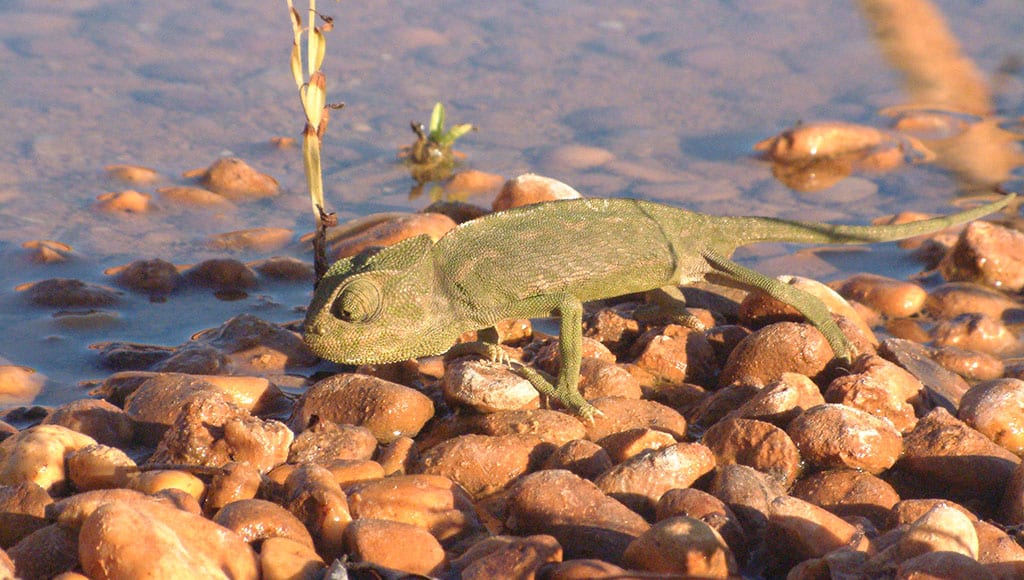
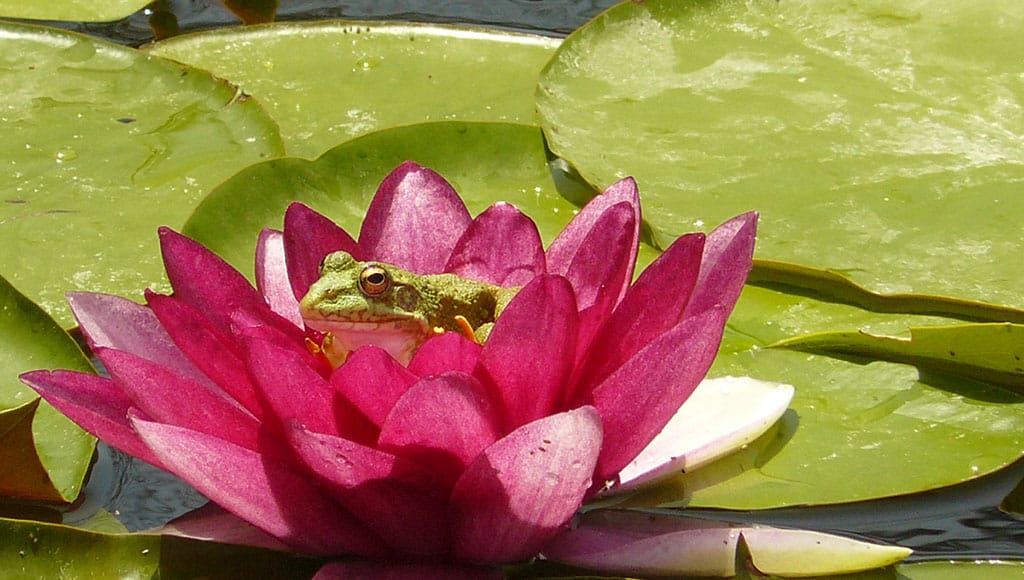
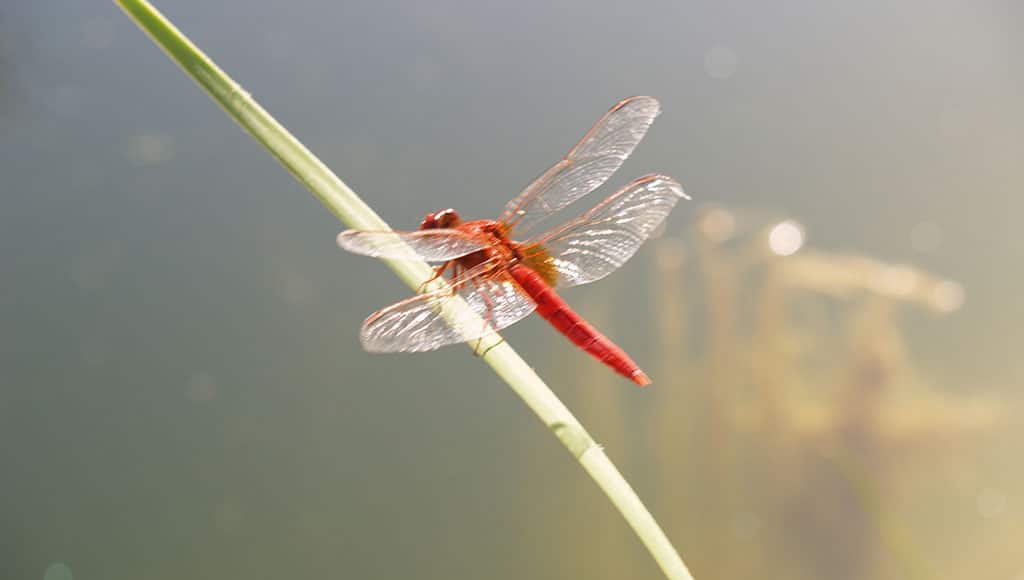
We watch the huge azure blue and smaller coral red dragon flies flitting about or sitting in the gravel on the edge having a drink. We have even seen a chameleon nonchalantly standing in the gravel having a slurp. We were told to expect frogs to come, and come they did with their distinctive evening chorus. Regular visitors are bats and the local bird population, so we put logs across rocks to give them access to the water near the plants.
We encourage all our visitors to swim, and they have loved using the pond. We are very pleased with the landscaping and used many of the excavated rocks to form long sloping walls with rock seats set into them. We placed gravel around the pond and planted out native grasses, trees and shrubs so that the pond merges into the garden. It serves both as a wildlife and a swimming pond.
Swimming in the pond is a wonderful experience–the water is softer and always clear and inviting. Our pond is 180 square meters in area and the plants are well established. It is a constant source of interest for visitors, and it is pleasant just to sit by it. The pond is a haven of calm away from the house, amongst the trees, an oasis for the wildlife, and for us.
For more information:
International Swimming Pond Federation
Posted by Rosie Peddle
February 2025